Image to Manimation challenge
The first time I let the LLM decide the animation. This time I wanted to test the LLM into animating something I had outlined on a digital whiteboard for an LLM coaching session I had done. I exported the image and let Claude Code loose on it.
It’s not the biggest challenge yet, but in just over 2 hrs and 37 prompts, I was able to get Claude to generate a version that I found acceptable.
Input
I had to split the image into 2 as Claude Code couldn’t take in a large image.
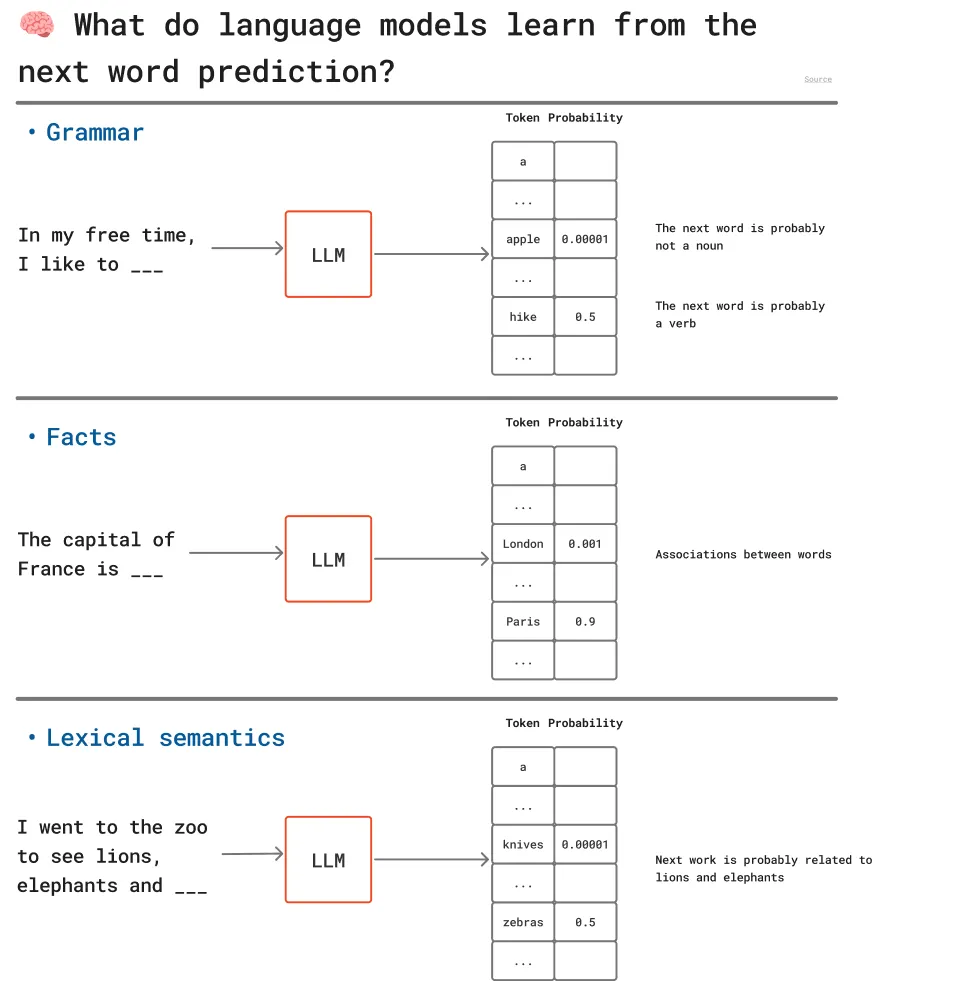
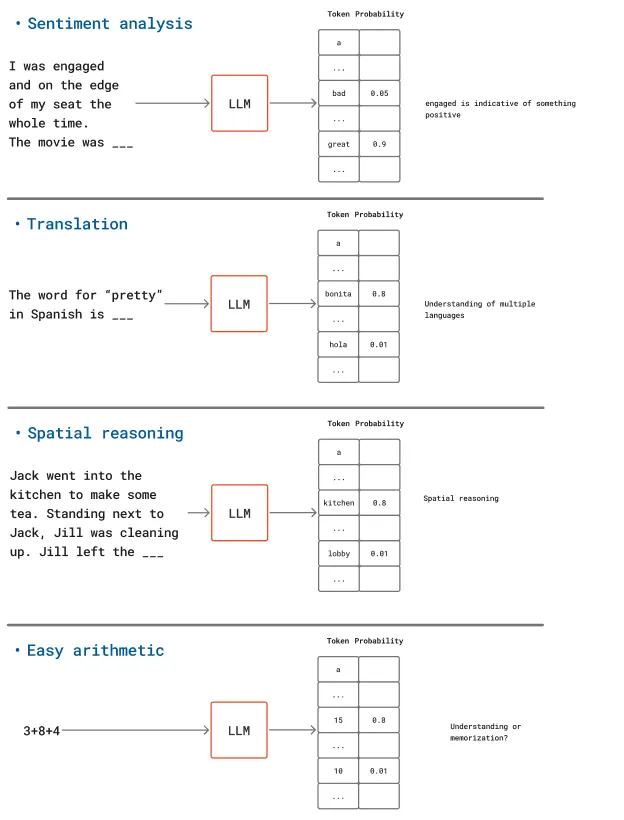
source: (youtube.com/watch?v=0SuyDLjNR9g)
Inside the process
This time I saved all my prompts with timestamps and let Claude give me some insights into the process & prompts.
<<The text below is generated by Claude.>>
TOTAL ACTIVE WORK BREAKDOWN (Excluding 5+ Hour Gap)
Summary Metrics
- Total active time: 2.01 hours (121 minutes) across 37 prompts
- Average pace: 3.35 minutes between prompts
- Unique prompts: 32 (86.5% unique)
Work Distribution
Initial setup/read        ███████████████ 8 (22%)
Design/planning           ██ 1 (3%)
Implementation            ████ 2 (5%)
Testing/debugging         ██████ 3 (8%)
Visual fixes              ██████████████████████████████ 16 (43%)
Refactoring               ████ 2 (5%)
Documentation              0 (0%)
Repository setup          ██ 1 (3%)
Key Insights
Visual fixes dominated the project - Nearly half of all prompts (43.2%) were focused on visual refinement: table alignment, fonts, colors, borders, fade effects, and annotation positioning. This suggests either:
- High visual quality standards
- Initial implementation needed significant polish
- Iterative discovery of visual issues through testing
Prompt Characteristics:
- Mostly short, focused prompts (avg 79 chars, 13.6 words)
- High specificity - 32.4% included file references
- 5 duplicate prompts showing iterative refinement
Front-loaded setup phase - 22% of prompts were reading documentation and initialization, mostly concentrated in the early part of Session 1.
Minimal direct implementation - Only 2 prompts (5%) were actual “write the code” commands. Most work was iterative refinement after initial implementation.
Low repetition rate - With 86.5% unique prompts, communication was generally efficient despite some early setup struggles.
Practical workflow - Testing/debugging (8%), refactoring (5%), and repo setup (3%) show a complete software development cycle in under 2 hours.
<<Now back to human generated text>>
Takeaways / Notes
- I had some trouble getting Claude to read the images so there were some duplicate prompts
- Not captured is that I made 3 manual changes in the code. Extremely minor (removing italic style, moving one line above another so animation was in order left to right and I can’t remember the last change)
- Visual fixes dominated the most time - I need a better / faster workflow. I was waiting for the whole scene to render to give it feedback.
- I could have asked it to design / generate one scene first before pulling the rest in, since all the other are the same. We (Claude and I;)) eventually got there.
Github
The prompts and inputs available in a repo.